
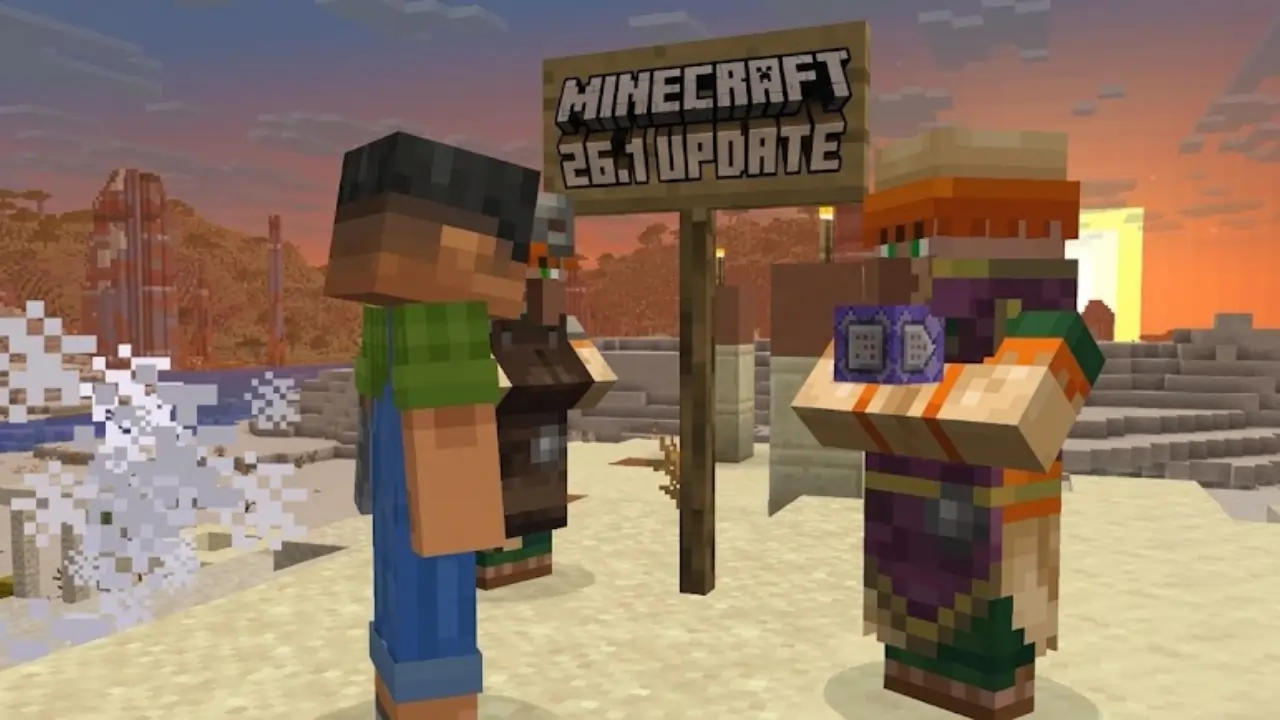
The Minecraft 26.1 Update?
Minecraft 26.1 is the first big game drop of 2026 after such time and the start of Mojang’s new version numbering system, Afetr replacing the old style version 1.xx for Java and Bedrock.
This update focuses on huge technical changes like a revamped lighting system, data‑driven villager trades, and an updated Java runtime, all of which set the stage for more exciting content later in the year.
When Will Minecraft 26.1 Release For Java And Bedrock?
This update will availabl For Java Edition, released in mid‑December 2025 as the first snapshot for the 2026 game drop.
Bedrock Edition is following the same year‑based version naming, with 26.1 previews leading into the first major content drop of 2026, expected in the usual early‑year “drop” window.
What Is the meaning of New Version Numbering In Minecraft 26.1?
Mojang has moved away from classic version numbers like 1.21 and 1.22 and now uses a year‑based system like 26.1 that matches the yearly drop schedule. In this system, “26” refers to the year 2026 content cycle and “.1” refers to the first major drop of that year, which helps players instantly understand where an update sits in the roadmap.
What Are The top Gameplay Changes In Minecraft 26.1?
From a player’s perspective, the most noticeable changes are how lighting works in your world, improvements to villager trading, and some initial groundwork for changes to enchanting. While this snapshot might seem a bit technical, the key takeaway is that these system changes affect how caves actually look, how bases appear at night, and how you trade with villagers for gear and rare items.
How Has Lighting Changed In Minecraft 26.1?
This 26.1 snapshot completely rewrites the algorithm that maps block and skylight levels to on-screen brightness. Effects like darkness, wither darkening, and night vision are now nearly identical across all dimensions, and night vision adds ambient light without compromising contrast, making caves and buildings look more natural.
What Does The New Lightmap Debug Renderer Do?
Pressing F3 + 4 activates a new lightmap debug renderer, which displays a small preview of block and sky lighting in the corner of your screen. This tool is especially useful when you’re building mob farms, adventure maps, or large survival bases and want to clearly see spawn-proofing and lighting levels.
How Are Villager Trades Changing In Minecraft 26.1?
In this new Minecraft update 26.1, villager trades will now be determined using a deterministic random sequence, similar to the system used for loot drops and bartering. Instead of being limited to fixed and hard-coded tables, villager trading becomes more predictable internally, while still appearing random to the player, which is crucial for future balancing.
What Does “Data‑Driven Villager Trading” Mean For Players?
In the new system, all villager trade offers can be defined in data files, allowing us to add, remove, or modify trades through data packs and future updates without touching the game’s core code. This makes it much easier for Mojang to implement major villager overhauls (new professions, improved late-game trades, rebalanced librarians) and for creators to design custom economies.
Are There Any Enchanting Changes In Minecraft 26.1?
Technically, enchanting has gained support for additional “cost” components so that enchantments are not limited to just XP levels as a cost. This small internal change strongly hints at a future rework where enchanting can use items, materials, or other resources as part of the payment when upgrading gear.
Will Enchanting Be Completely Reworked In This Update?
Right now, 26.1 snapshot 1 only lays the groundwork by expanding how enchantment costs are defined; it does not fully replace the enchanting table UX or add new enchantments. However, content creators and the community widely speculate that this foundation will be used for a bigger enchanting overhaul in later snapshots or drops during the 26.x cycle.
Are Potions And Brewing Getting An Update In Minecraft 26.1?
The snapshot itself does not add a brand‑new brewing stand or potion UI, but recent technical work on separating potion textures and cleaning up effects is fueling rumors of a brewing system refresh. Many players expect Mojang to modernize potions by improving recipes, visual clarity, and how potion information is shown, similar to enchantment changes.
Will There Be New Biomes Or Dimensions In Minecraft 26.1?
The core snapshot notes do not explicitly list new overworld or Nether biomes yet, but hints in the code and Bedrock previews suggest more flexibility for biome lighting and ambiance. Because of this and previous comments about underdeveloped cold biomes and the Nether, players are speculating about new cold‑region content or expanded Nether biomes later in the 26.x cycle.
How Are Java Requirements Changing In Minecraft 26.1?
Minecraft 26.1 snapshot 1 upgrades Java Edition to require Java 25, replacing the older Java 21 runtime. The bundled runtime is now the Microsoft build of OpenJDK 25, which brings performance improvements like compact object headers for lower memory usage when properly configured.
What Does The New Java Runtime Mean For Performance?
By default, most players will simply see similar or slightly smoother performance, but server owners can enable flags like UseCompactObjectHeaders to reduce RAM usage on large worlds. This optimization is particularly valuable for high‑population SMP servers and big modded servers that push memory limits.
How Does Minecraft 26.1 Affect Redstone, Farms, And Technical Builds?
The new lighting system can change how your underground farms, mob farms, and redstone contraptions look, especially when using Night Vision or custom shaders. Data‑driven trades also open the door for map makers and server admins to create custom villager‑based shops without complex plugins, while maintaining consistent behavior between servers and single‑player.
1 thought on “Minecraft has launched the 26.1 Update. Are you want to know Why Is It So Important?”