
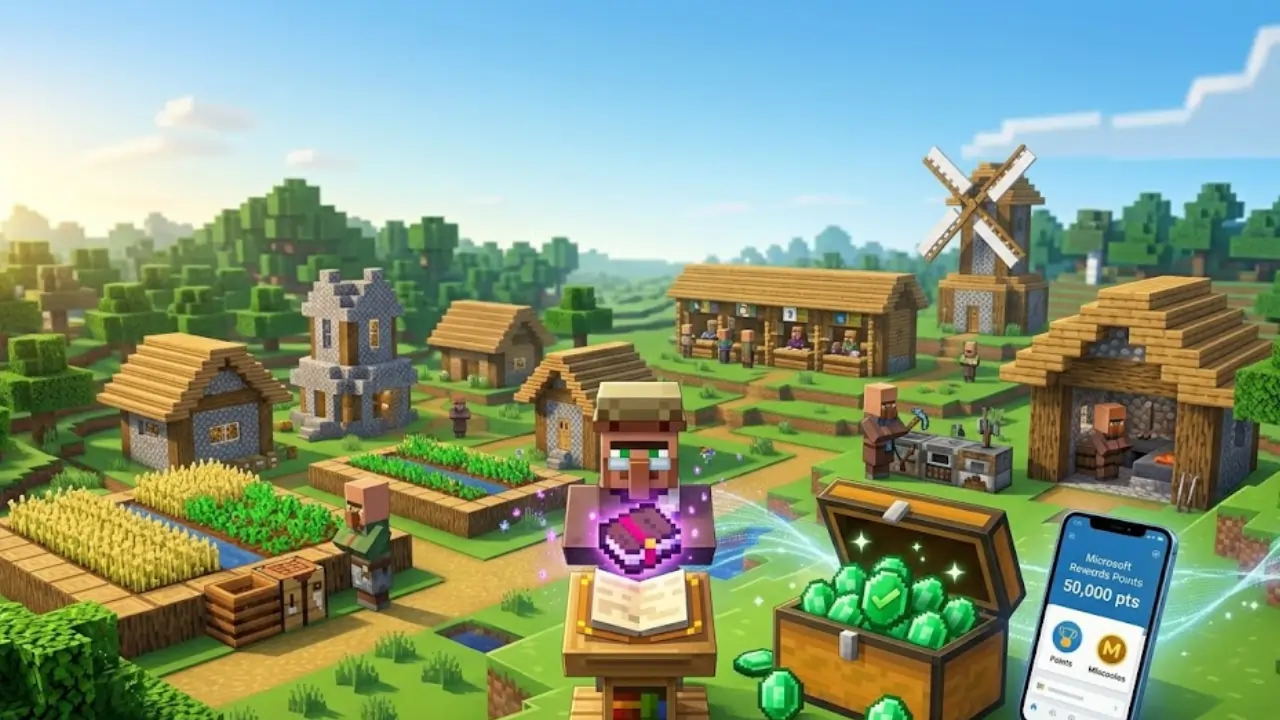
If you’ve spent any time in a Minecraft village, you’ve noticed that not all villagers are the same. Some wear white aprons, some black, some leather… and each one offers different trades. Mastering villager jobs is one of the most important skills in the game – it can get you enchanted diamond gear, rare items, and unlimited emeralds.
In this complete guide, I’ll walk you through every villager job, their workstations, the best trades to look for, and how to set up a trading hall that will make your Minecraft life infinitely easier.
What Are Villager Jobs?
Villager jobs determine what a villager buys and sells. A jobless villager (a “nitwit” or a regular unemployed villager) will not trade with you. To give a villager a job, you simply place a workstation (like a lectern, blast furnace, or composter) near them. If they are not already assigned to a job, they will claim that workstation and immediately become a specific type of villager.
In Minecraft 1.21 (Tricky Trials) and the latest 2026 updates, the villager trading system remains largely unchanged, making this guide fully up‑to‑date.
All 13 Villager Jobs & Their Best Trades
| Job | Workstation | What They Sell (Best Items) |
|---|---|---|
| Librarian | Lectern | Enchanted books (Mending, Protection IV, Efficiency V), name tags, lanterns, bookshelves |
| Armorer | Blast Furnace | Diamond armor (enchanted), chainmail armor, bells |
| Weaponsmith | Grindstone | Enchanted diamond sword/axe, iron sword, bell |
| Toolsmith | Smithing Table | Enchanted diamond pickaxe/axe/shovel, iron tools |
| Cleric | Brewing Stand | Bottles o’ enchanting, redstone, lapis lazuli, ender pearls, glowstone |
| Farmer | Composter | Golden carrots, bread, cakes, beetroot soup, apples |
| Fisherman | Barrel | Enchanted fishing rod, cooked fish, campfires |
| Fletcher | Fletching Table | Arrows, tipped arrows, crossbow, bow, emeralds from sticks |
| Shepherd | Loom | Colored wool, banners, shears |
| Mason | Stonecutter | Quartz, terracotta, polished stone variants, bricks |
| Butcher | Smoker | Cooked meat (steak, porkchop, mutton), rabbit stew |
| Leatherworker | Cauldron | Saddle, leather horse armor, leather cap/tunic |
| Cartographer | Cartography Table | Ocean explorer map, woodland explorer map, banners, compass |
The Most Valuable Jobs (And Why)
1. Librarian – The Enchantment King
The librarian is by far the most important villager in the game. Why? Because they sell enchanted books, including treasure enchantments like Mending, which can’t be obtained from an enchantment table.
How to get the best librarian:
- Place a lectern next to an unemployed villager.
- Check their first trade (the enchanted book).
- If it’s not the enchantment you want, break the lectern and place it again. Repeat until you get the book you need.
- Once you find Mending, Protection IV, Efficiency V, or Silk Touch, lock the trade by trading with them.
Pro tip: Zombify and cure a librarian to get massive discounts (down to 1 emerald per book).
2. Farmer – Your Emerald Factory
Farmers are the best source of emeralds. They buy wheat, carrots, potatoes, pumpkins, and melons. If you build an automated crop farm, you can turn crops into emeralds quickly.
Best farmer trade:
- Pumpkins and melons give the best emerald return per crop.
- A cured farmer can buy 1 pumpkin for 1 emerald – that’s insane value.
3. Armorer / Weaponsmith / Toolsmith – Gear Up
These three are your end‑game gear suppliers. With enough emeralds and a cured villager, you can buy a full set of diamond armor, sword, pickaxe, and axe for a fraction of the diamonds you’d normally spend.
Strategy: Cure them at least once to get prices down to 1 emerald for iron/diamond gear.
4. Fletcher – Cheap Emeralds from Sticks
Fletchers buy sticks. 32 sticks = 1 emerald (or even 16 sticks after curing). Sticks are made from wood – one of the easiest resources to farm. With a tree farm, you can get thousands of emeralds in no time.
How to Get the Best Trades – Zombie Discount Trick
If you want the cheapest possible trades, you need to use the zombification and curing mechanic.
Steps:
- Find a villager you want to use.
- Let a zombie infect it (on Hard difficulty, the villager always turns into a zombie villager).
- Cure the zombie villager by throwing a Splash Potion of Weakness and feeding it a Golden Apple.
- After a few minutes, it will turn back into a normal villager with huge discounts – often 1 emerald for items that usually cost 10–20 emeralds.
- If you cure the same villager multiple times (in versions 1.20+), the discounts stack until trades become essentially free.
Note: This works for every job. It’s the single most powerful way to get cheap enchanted books and gear.
Setting Up a Trading Hall
Once you have a few villagers with good trades, you’ll want to organize them in a trading hall. Here’s a simple design:
- Zombie‑proof the area: Use slabs, trapdoors, and light to keep zombies away.
- One cell per villager: Each villager should be in a 1×2 space with their workstation in front.
- Breeding area nearby: Keep a separate area with beds and crops to breed more villagers.
- Minecart transport: If you’re moving villagers from a village, use rails and minecarts to bring them safely.
A well‑designed trading hall lets you access all your best traders without running around.
Villager Breeding – Get as Many as You Need
To get the villagers you need, you must breed them. Requirements:
- At least two adult villagers (willing to breed).
- Three beds (one for each adult plus one for the baby).
- Food: Throw 12 carrots, 12 potatoes, 3 bread, or 12 beetroots at each villager (or use a farmer to automate).
Villagers become willing after having enough food. Within minutes, they produce a baby villager, which grows up in 20 minutes (or instantly if you have a bed nearby and you’re not looking at them).
Trades by Level – What You Need to Know
Each villager has five trade levels. As you trade with them, they gain experience and unlock new trades. For example:
- Novice: First two trades (e.g., librarian: paper → emeralds, emeralds → bookshelf).
- Apprentice: After trading a few times, new trades unlock (e.g., emeralds → glass).
- Journeyman, Expert, Master: Each level unlocks more powerful items.
Tip: To get to master level quickly, trade the items that give the most XP, like buying enchanted books or selling large amounts of crops.
2026 Trading Changes – What’s New?
As of Minecraft 1.20.5 and 1.21, villager trading is mostly stable, but there are a few things to note:
- Zombie curing discounts still work but are capped in some server configurations. On vanilla single‑player, they stack.
- Wandering traders remain separate – they offer exotic items like saplings, corals, and tropical fish buckets.
- Trading hall designs still rely on the same mechanics; no major changes have been introduced in recent updates.
FAQs About Villager Jobs
-
Can I change a villager’s job after trading with them?
No. Once you trade with a villager at least once, their profession is locked. To change it, you must have never traded with them. So, always check the first trade before you commit.
-
Why won’t my villager take a job?
They are not a nitwit (green coat).
The workstation is accessible (they can reach it).
It’s daytime (villagers only claim jobs during working hours).
They are not already linked to another workstation. -
What’s the best job for emeralds?
Farmer (for crops) or Fletcher (for sticks). Both can generate massive emeralds with simple farms.
-
How do I get Mending without enchanting?
Breed a librarian and keep refreshing their trades until you see Mending. Then lock it by trading.
Final Thoughts
Villager trading is one of the most powerful systems in Minecraft. Once you understand the jobs and how to get discounts, you’ll never worry about finding diamonds or rare enchantments again.
Start with a librarian for Mending, a farmer for emeralds, and then build out the rest. Cure them when you can, and you’ll have a trading hall that makes the game feel like creative mode – but with survival satisfaction.
Happy trading! 🧙♂️